Showing posts with label Myths. Show all posts

Monday, August 21, 2017

SOUL WARRIOR and the SOLAR ECLIPSE


The phenomenon of a SOLAR ECLIPSE has been around since...well, the SUN and the MOON have been around, so obviously in every culture around the world they've been incorporated into the myths and the superstitions, alongside the sciences. 

In SOUL WARRIOR: THE AGE OF KALI the myths and legends of India come to life. Lord Karna is the son of the Sun God. As such, whatever happens to the Sun naturally impacts him. 

Enjoy an eclipsed excerpt from the beginning of SOUL WARRIOR

(Available for purchase on Amazon worldwide except South Asia, where it is soon to be released.)

AMZ BUY LINK: getBook.at/SoulWarrior

CHAPTER ZERO
DWANDA-YUDDHA: THE DUEL
The Himalayan Mountains. Five thousand years ago.
Absolute darkness shrouded the Human Realm, and had for three days and three nights. Some believed the occurrence was prophetic, like the prolonged amavasya or new moon night that had heralded the Great Kuru War two thousand years ago. The war had given birth to the dark Age of Kali, the age of asura. In contrast, hope was ripe that this event would trigger the Age of Light. But the Bard wasn’t here to succumb to superstition.
The first day without the sun’s light had spread confusion and chaos across the realm. The second day had brought desperation in the breasts of humans and fear in the belly of Celestials. The third day—today—was a feast for the asuras. Death lay everywhere.
The human world burned without its sun. How soon before the Heavens went up in ames?
The Bard’s troubled eyes reread the last line. Then he deliberately scratched it off, lifting his long, pointed talon from the parchment made of dry palm leaf. With a sigh, he rested his aching hand on his trembling thigh. He would spare a moment to ease his body, and his mind from the strain of observation and due recordkeeping. If he didn’t, he’d forget his duty as Witness of the Cosmos, and begin to question fate.
Despite the fire that crackled close to his right knee, and the feathered form of his upper body, he was cold. An icy wind had settled around the Pinnacle of Pinnacles, where he sat cross-legged on a seat made of rock and snow. He’d chosen this perch because it gave him an impartial view of the events happening in the world. He was the Bard, entrusted with keeping the Canons of the Age of Kali, just as the Soul Warrior was entrusted with keeping the Human Realm safe from asuras. Would they both fail in their duty today?
The Bard shook off the heavy despair the darkness had brought into the world. He mustn’t judge. He shouldn’t question. He would sharpen the talon on his fore nger, dip it into the vessel of ink kept warm by the re, and write this tale. That was all he could do. Be the witness to history.
So he raised his feathered hand and began to write again while his eyes, sparked with power, knowledge and magic, saw clearly events unfolding from great distances. A thousand kilometers to his right, Indra, the God of War and Thunder, fought the Dragon. Indra did not fare well. But that didn’t concern the Bard as much as the clash between the Soul Warrior and the Stone Demon. Over and over, his eagle eyes were drawn to the duel taking place in the heart of the world, not only because it was a magni cent battle to behold, for it was, but because its outcome would decide mankind’s destiny.
The Soul Warrior was more than a great warrior. Karna was a great soul. Fair, honorable, brave and resilient, he was the perfect protector of the Human Realm. Of course, there were other reasons he’d been chosen to ll the of ce of Soul Warrior—there always were when Gods and demons were involved. But Karna’s existence was a testament to righteous action and if anyone could bring back the day, it would be him.
But how did one vanquish stone, the Bard wondered?
Avarice and cruelty, two nefarious desires, had made Vrtra and Vala attack the Human Realm. Three days ago the Dragon had swallowed the Seven Rivers in the north, and the Stone Demon had imprisoned the Sun God, his daughter, and all the cattle of the region in his cave.
The Bard paused his writing as a thin vein of lightning winked across the skies, but without the accompanying roar. Indra’s strength waned. His thunderbolt hadn’t left Vrtra screaming in pain this time. The Bard spared a moment’s attention on the duel, just enough to note that the Maruts, the Celestial Storm-gods, waited in the clouds to rescue their god-king in case of a calamity. Indra would survive even in defeat. Of that, the Bard was sure.
But Karna had no one at his back. His might and god-powers had depleted without the sun’s healing warmth and light. His divine astras, weapons, had not slowed the Stone Demon down, at all. Only the convic- tion that he could not fail his godsire, his sister, and the innocents under his protection drove him now. His birth family had once abandoned him to his fate, but he would not abandon them to theirs—such was the greatness of Karna.
The Bard crossed out the last observation. No questions. No judgment. No praise, either. The canons would be free of all emotion. He wasn’t here to embellish history or glorify the history-makers, as some bards were wont to do.
It wasn’t embellishment to write that the foothills of Cedi were drenched in the Soul Warrior’s blood. Or observe the gushing wounds on his body, despite his armor, that would make the hardiest of warriors bellow in agony, but not him. It wasn’t embellishment to write that the Heavens were empty for the Celestials had come to Earth to watch the battle, relight cupped in their palms to light the warrior’s way.
The Naga, the Serpent People, also looked on, hissing from the mouth of the portal that led to their underground realm beneath the hills. The Serpent King will not choose a side. Vrtra and Vala were half Naga, after all. All across the Human Realm, demons roamed free, taking advantage of the darkness and preying on human esh and human souls. It was a terrible moment in history. The asuras had the upper hand in the eponymous age of Demon Kali.
Vala did not have arms and half a leg, but still he came at Karna. He had an ace up his sleeve. There were plenty of creatures about, an entire mountain close at hand. He began to chant the spell of soul transference. It was the darkest of all magic, the possession of another’s soul. Soon, he would be whole again and stronger than before.
Battered and bleeding, the Soul Warrior veered away from the Stone Demon. He leapt over boulders and charred vegetation. The onlookers called him a coward. Had he forfeit the duel? Has he forsaken mankind?
Karna dove for Manav-astra, the spear of mankind, he’d thrown aside yesterday after his bow, Vijaya, had shattered under repeated use. In one smooth motion, he rolled, picked up the astra, coming up in the spear-thrower’s stretch. His tattered lower garment billowed about him as a gust of wind shot through the air. His muscled torso glis- tened with blood and sweat, tightened as he pulled the arm holding the spear back.
He meant to throw Manav-astra at Vala. A futile attempt, to be sure? As long as Vala was made of stone, broken or not, his body was impregnable. Karna should have waited for Vala to transfer his soul to an onlooker. Then Karna should have vanquished the possessed creature.
Taunting laughter reverberated through the foothills of Cedi. Vala had reached the same conclusion. The Celestials looked at each other in angry silence, unable to interfere. A dwanda-yuddha duel was fought between two opponents of equal size and strength alone. The humans hadn’t stopped screaming in three days, the din simply background noise now.
The Bard scribbled the observations onto the parchment in no particular order. He wished he was a painter, for surely this was a picture worth a thousand words.
The demon hobbled toward the warrior, who stood still as stone with his arm drawn taught behind him. Then nally, with a roaring chant the Soul Warrior shifted his weight from his back leg to his front and let y Manav-astra at the Stone Demon with all his remaining might.
Karna didn’t wait to see the rami cations of his action. And there were plenty to come. He ran into the mountain cave to free Vala’s hostages. Within moments the rock face rent in half, and bright streams of light speared through the terrible darkness. A new day had dawned on the Human Realm after three days of perpetual night.
The sun’s power was too bright, too full of hope. Yet, the Bard looked on pensively, wondering if the Soul Warrior knew this wasn’t a victory. It was merely a reprieve.
© Falguni Kothari
INDIA COVER.


Sunday, April 6, 2014

FLIRTING WITH A FAIRYTALE

Be careful what you wish for, you just might get it...

Diya Mathur, the heroine of my new romance, Bootie and the Beast, is a die-hard believer of all things whimsical. She smooches frogs, rescues dudes in distress, bawls her eyes out as often as she gets a Swedish massage and, above all, dreams up wishes every day and wishes her dreams come true. And if desperate enough, she invokes the help of Lord Vishnu or Allah or Buddha...depending on which part of the world she is in or which side of the family she feels "good feels" for at the time...to fulfill her deepest desires.

Which brings us to the topic of this post: WISHES. And why we must be cautious of what we wish for.

So, what is a wish?

  1. Definition of wish (v)

    Bing Dictionary
    • wish
    • [ wish ]
    1. have strong desire: to have a strong feeling of wanting something to happen or wanting to have something
    2. want something: to want something or want to do something
    3. express desire: to express or feel a desire that something is true or will come to pass
    synonyms: desire · aspiration · hope · yearning · longing · craving · fancy · inclination

Wishing is one of the most basic traits of being human. Without wishing, there is no progress, no innovation, no evolution. Without the desire for something, we will not strive and therefore not achieve that something, however small or large, benign or extraordinary. Could be why most of our cultures and societies around the world have myths and folktales dealing with wish fulfillment. Even ethical or moral tales are nothing but the desire, the wish of a human being to be good.

Let's innumerate a few:
1. Kissing a frog to turn him into a prince.
2. Throwing coins in fountains or wishing wells.
3. Wishing on a falling star or a fallen eyelash.
4. Prayers are nothing but wishes...for safety, for sustenance, for a happy life.
5. Wishing on Aladin's lamp or a genie's lamp.
6. Blowing candles from birthday cakes.
7. Loves me/loves me not flowers.
8. Voodoo

I'm sure there are lots more. Do write down if you know any interesting ones in the comments.

Anyway, there are a hundred ways to wish and while most fulfilled wishes bring us untold joy, there will be times when we wonder why in hell did we ever wish for that! 

Which brings us to me and my last week's wish. I am reading tomorrow at Lady Jane's Salon in NYC. My first reading ever and I am suitably frazzled about it. I have been practicing aloud and even taped myself. OH wow. I sound like Minnie Mouse. I squeaked and...don't ask. Just don't. So, I wished I'd get a cold...a small one and hopefully my voice would get a bit huskier and sound nice and sexy at the reading. Boy. Has my wish backfired, People. I got said cold and now I can't hear myself talk, much less gauge whether I sound sexy or not. Did I mention my migraine?

Ah. We humans get ourselves into unnecessary pickles, don't we?

Monday, March 10, 2014

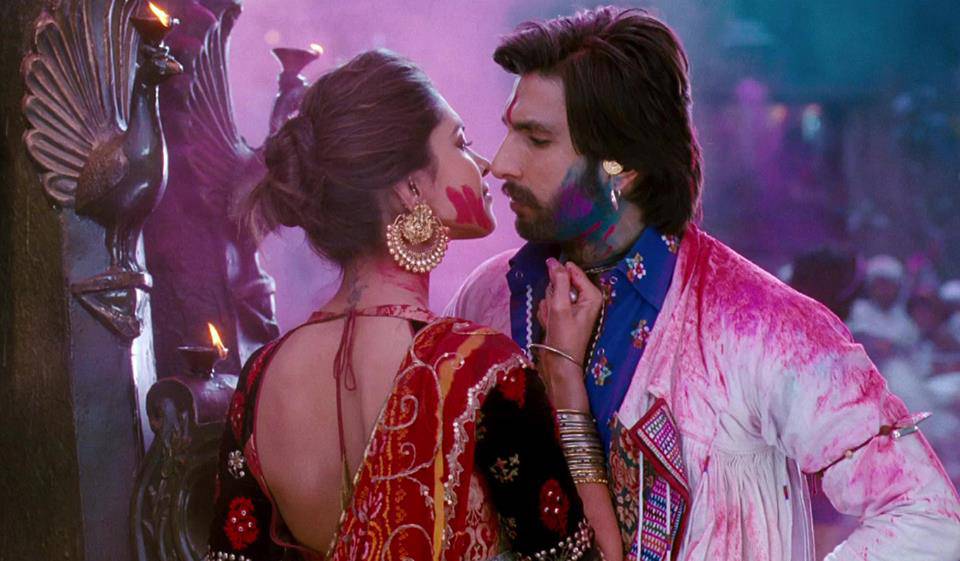
COLOR ME HAPPY HOLI.

Holi: the festival of colorrrishous fun.


WHERE: Mostly the north half of India.

WHEN: Day after the first full moon in March (usually.)

WHY: Well, there are many reasons. The more mundane ones are that HOLI signifies the end of winter, the Spring harvest and bounty. Mythologically, HOLI can be attributed to:
1. The immolation of the demoness HOLIKA, who on behest of her demon-king brother, HIRANYAKASHIPU, tried to assassinate her nephew, PRAHALAD, a devotee of LORD VISHNU. Vishnu saves Prahalad and sets aflame HOLIKA instead. The good old Good vs. Evil myth.
2. Another one is how a bunch of kids from the village of PRTHU,  supernaturally aided by LORD SHIVA, managed to run-off a big, bad ogress DHUNDHI.
3. HOLI-day is also the day when LORD SHIVA (the god of destruction) opened his THIRD EYE and set fire to LORD KAMA  (the god of love) for interfering in his business.
4. MY favorite by far of these HOLI myths is about KRISHNA-RADHA.
Out of jealousy, the young Lord Krishna (an incarnation of Lord Vishnu) asked his mother YASHODA why Radha (a village belle and his first love...some say his only great love) was so pretty and fair and he so dark. Yashoda shook her head in exasperation and told him to go paint Radha's face to match his own or vice versa. Krishna, always willing to play mischief on the village belles, thoroughly enjoyed coloring Radha with red mud from the banks of the river. And so, to this day,  the great love of Krishna-Radha is celebrated on HOLI with GULAL, dance and music. Not to mention, BHANG (a drink prepared from the leaves and flowers of Cannabis.)


HOW: In earlier times, Gulal was made from the flowers of a tree called the FLAME OF THE FOREST. Quite apt, as Gulal is mostly the colors of fire: red, orange, saffron, yellow etc. Though, in recent times any and all colors are thrown about. Anyway, the Gulal and AABIR (made from natural colored talc) that were used in medieval times were actually good for the complexion and not the synthetic, chemical powders of today that sometimes cause allergic reactions on skin. Then there's the PICHKARI, elaborate water pistols, to soak the color into the HOLI-players, who in their white outfits are like canvases just waiting to be color-splashed by artists. 

Hordes of happy people on the streets, colors, song, dance, water-fights...Yes, it is as fun as it sounds and is about the only festival of India I truly miss in NY (Don't believe me, watch the video I've posted above.)

Friday, December 27, 2013

DIVINE CHILD MYTHS

A vast majority of the world's myths and religions prescribe to the idea of a Divine Child who might be a god, demi-god, hero or savior come to change the world (the triumph of good versus evil). The Child is most often not conceived naturally. The Divine Mother has an encounter with a ruling deity or pure spirit and gives birth (again most often not naturally) to the god-like child, often of royal lineage. 
Fascinatingly, there are a horrendous amount of such births in the world's cultural collectives (a terrific number in Indian myths alone). I am going mention those I know, if you know more, then I'd love to hear about them.


1. Jesus Christ - Son of God, virgin birth to the Virgin Mary. (Christian)

2. Horus - son of the Sun God, divine child born to the virgin goddess Isis. (Ancient Egypt)

3. Krishna - Reincarnation of God Vishnu born to the royals Vasudeva and Devaki in prison. Secreted out of prison in the middle of the night and raised by cowherds Nanda and Yashoda. When he came of age, he went back to free his parents and assassinate his evil uncle, Kamsa, who had his parents imprisoned. (Hinduism)

4. Greek mythology is full of strange births from the Titan Cronus, to his son, Zeus, to Zeus' offspring Athena, Perseus, Dionysus, Heracles (Hercules), Helen of Troy etc.

5. Romulus and Remus - Vestal Virgin, Rhea Silvia gets impregnated either by the God Mars or Hercules and births the twins. Her evil brother, King Amulius, orders their drowning in the twins in the river Tiber. The twins survive somehow, and are found and adopted by a she-wolf. She nurses them as babes. A woodpecker feeds them as they grow older and they are finally adopted by a shepherd. They grow up, kill their uncle, restore Numitor, the rightful king-uncle to the throne, become heroes and found Rome.

6. The Indian Epic, the Mahabharata, has a countless number of such births. It is supposedly an accounting of the ancient kings of India. 
Kunti's offspring. Kunti is a key figure in the epic, the mother of the heroes. Mother too, of one tragic hero, her first-born, Karna. She was given a boon from the Sage Durvasa, a boon to be used after marriage as it summoned Gods from the Hindu pantheon to impregnate her. She foolishly chanted the mantra as a young girl and accidentally summons the Sun God, Surya. He impregnates her and she gives birth to Karna, through her ear, as she must remain a virgin to be wed honorably. She abandons the child in the river.
The second, their and fourth times she summons Gods, its within the sanctions of her marriage and on behest of her husband, the weak and impotent, King Pandu who has abdicated the throne.
She gives birth to Yudhishtira by Yama, the God of Death. Bhima by Vayu, the God of Wind and Arjuna by Indra, the God of War and Thunder. Her husband's second wife begs for children and using the mantra gives birth to Nakul and Sahadeva, twins by the twin gods, the Ashwins.

The rival Kuru family could not remain ordinary in such circumstances. Thus Queen Gandhari after a two-year pregnancy gives birth to a lump of clay, which is then on the advice of sages and gods, separated into 101 lumps of clay and left to gestate in bowls or vases. They grow into the 100 Kaurava brothers and their only sister.

The five demi-god Pandava brothers, all marry the princess of Panchal, Draupadi, who emerged fully formed from a fire with her twin brother, Dhrishtadyumna. 

Okay, I'm tired of writing as I'm sure you guys are fed up of reading what is essentially the same concept over and over. There's an interesting version of why such myths exist that has to do with our spiritual and psychological evolution or awakening or rebirth or recreation, our Kundalini energy. But I won't go into that just yet.

Friday, December 20, 2013

EAST vs WEST

East is East and West is West and what's the reason that twain doesn't meet eye to eye?


Answer: PERSPECTIVE.

In absolutes...

If you're an Easterner you are part of the Cosmic Whole. Your life is a journey towards eternal realities. Your Universe is cyclical in nature, constantly recurring. Your world lives inside you in your soul and you seek to liberate your worldly "Me"  from the true "Me."

In contrast, if you're a Westerner you are a part of the Divine. Your life is a service to others: God, people and work. You have but this one life and must live it to the fullest. Your "worth" depends on external factors. Your salvation depends on God, your success depends on your business or your boss.

I believe that nothing is absolute and East and West draws ever closer to become One.


One of the best authors, mythologists and TED talkers: Devdutt Pattnaik. Its a 20 minute talk but well worth the time. IMHO.

Monday, September 9, 2013

THE AGE OF MYTH

The Deluge:

Let me tell you a story...

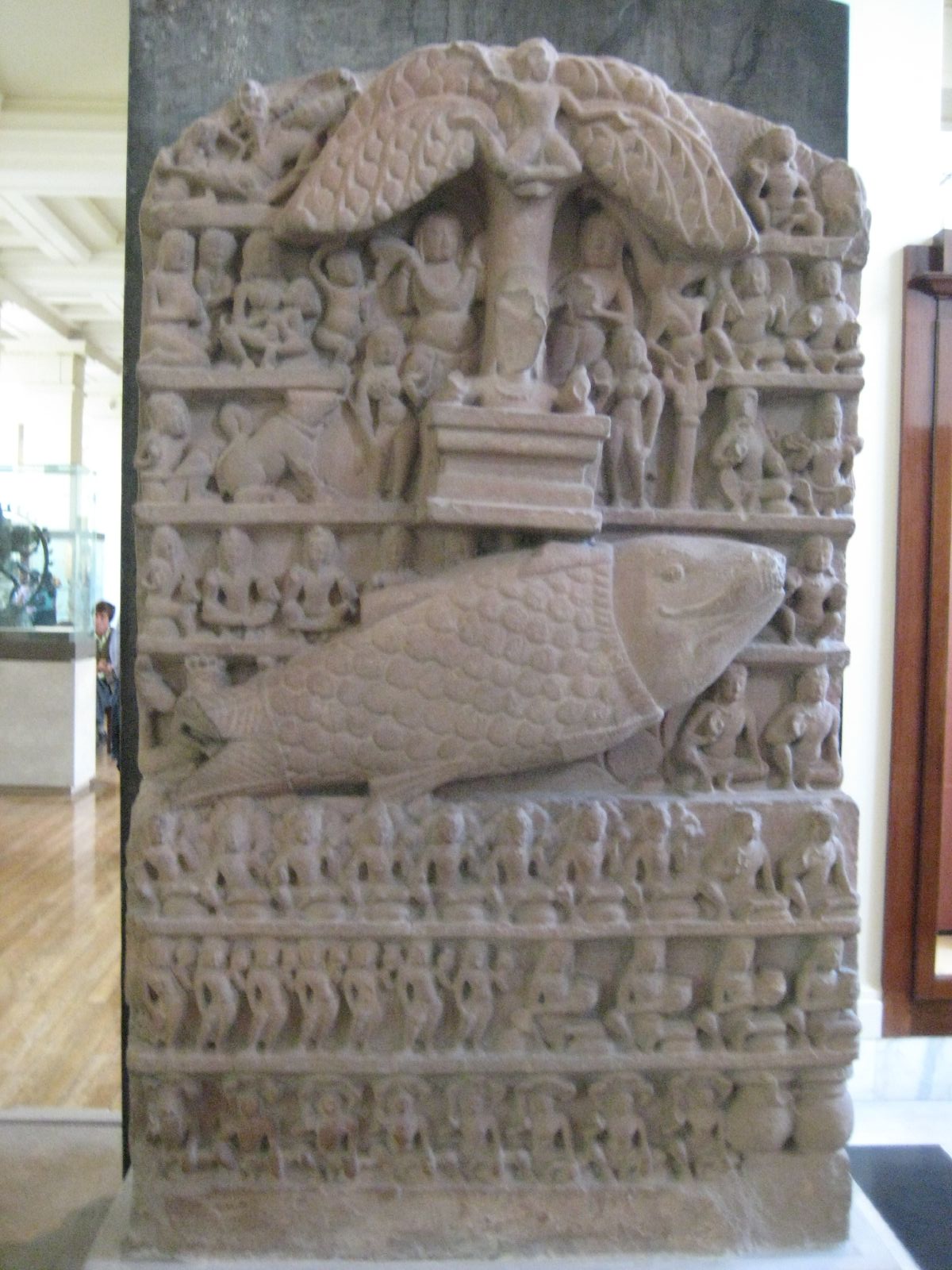
Innumerable years ago, Vaivasvata Manu while performing ablutions and religious rituals on the banks of the river Chervi accidently catches a tiny fish in his cupped hands. The fish introduces himself as Matsya, asks Manu to spare his life and protect him from the creatures of the river. 

If the request was a test of character, Manu passes it with flying colors. He transfers Matsya into an earthen pot filled with water and takes him home. When Matsya grows too big for the pot, Manu digs a ditch outside his house for the fish. And still Matsya grows and Manu transfers him into a pond, then a lake, then to the mighty Ganges River (called the spouse of the Ocean.) When Matsya grows so massive that even the Ganges cannot harbor him, Manu assists Matsya in his journey to the Ocean. 
Source: British Museum


There they part company, but before they do, Matsya promises to save and protect Manu as Manu had done him. Matsya foretells of a great catastrophic flood that would submerge the whole world. The fish advises Manu to build a great big boat, gather the Saptarishis (the seven great sages) and collect all the seeds of the world and keep them close.

In due course, the flood came. Manu, the Saptarishis and the grain boarded the boat and the great horned fish, Matsya, as promised, navigated the boat to the heights of the Himalayas and tethered it to safety. Matsya then reveals himself as Prajapati Brahma, lord creator of the universe. He then passes the mantle of Prajapati (Creator) to Manu, urging him to create Man and set up the Ways of Civilization.

Manu, Noah or Gilgamesh, what we learn from these legends is that the deeper we dig into diversity, the closer we'll come to the One Truth.


"Myth is essentially a cultural construct, a common understanding of the world that binds individuals and communities together. This understanding maybe religious or secular. Ideas such as rebirth, heaven and hell, angels and demons, fate and freewill, sin, Satan and salvation are religious myths. Ideas such as sovereignty, nation state, human rights, women's rights, animal rights and gay rights are secular myths. Religious or secular, all myths make profound sense to one group of people. Not to everyone. They cannot be rationalized beyond a point. In the final analysis, you either accept them or you don't." ~ Dr. Devdutt Pattanaik.

Monday, February 4, 2013

URBAN LEGENDS

Here's a fantastic February fable for you. Please excuse the alliteration, I'm trying to get into the right writing spirit.
Someone told me this story just the other day. In the middle of some night somewhere close to you, a man complained of breathlessness and chest pain to his wife. Frazzled, the wife decided not to call for an ambulance and bundled up her husband in the car and drove him to the closest ER herself. Now, their hospital has 2 entrances for ER: one for ambulances and first responders and the other, just around the corner for the common folk who drove into ER. The lady and her husband not realizing this distinction, stopped the car outside the ambulance entrance and started banging on the glass doors of the ER. Obviously, they didn't open and no security guard or medical personnel stood in sight or hearing distance. The wife stood there banging and screaming, her husband gasping and sweating, for a good five minutes when a nurse suddenly appeared behind the doors and let them in. She told them of their folly and directed them to the check in office from inside. Then she disappeared, presumably to do her job. After the husband was checked in and stable and everything was taken care of to perfection, the wife asked after the Good Samaritan nurse called Maria Something or other. Imagine their shock when they were informed that no nurse by that name worked in ER or for that matter in the whole hospital. The wife and husband insisted that there was and that they wanted her found so they could offer their gratitude. They even described her vividly. After several days, when the husband was discharged with a clean bill of health, they again asked after the nurse. The nurses department told them that there no longer was a Maria Something working in ER. But there had been until six months ago when she'd died of natural causes. Her ID picture confirmed that's who the couple had seen and spoken to.
Yeah, freaky. And here I don't believe in ghosts but I believe the groundhog picked Spring over Winter :)
So who do you think opened the ER doors for the couple? Do you have creepy stories to share?